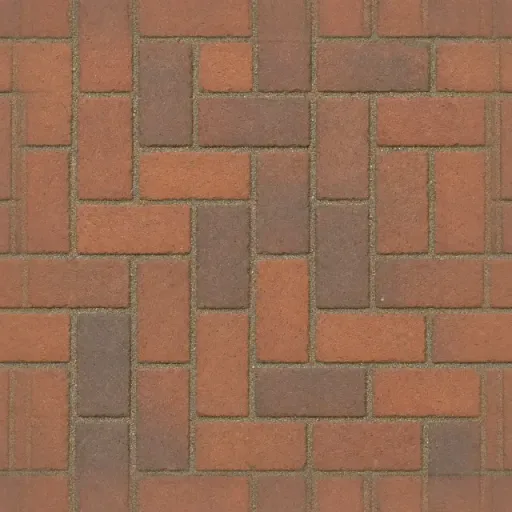
 Texmateria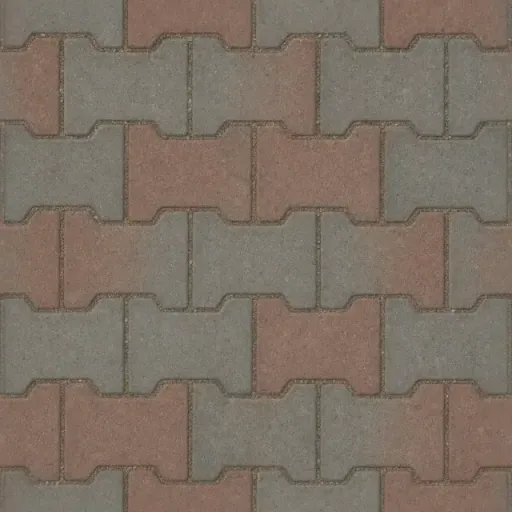
Interlocking Paver
A modular concrete paving block shaped to lock with neighboring units. The look comes from repeated geometry, bevels, sand joints, small height differences, and worn high points.
Common names
- block paver
- concrete paver
- paving block
- unit paver
Search phrases
- sidewalk paving blocks
- gray red paver pattern
- interlocking sidewalk
- concrete block pavement
Common uses
- Sidewalks
- Plazas
- Driveways
- Parks
- Commercial exterior areas
Choosing points
- Best for sidewalks, parking, and plazas where regular blocks and easy repair are useful.
- Patterns and color mixes can look civic, residential, or commercial.
- Joints collect sand, weeds, gum, and dirt.
- Individual blocks can settle or rotate over time.
How it ages
- Good for maintenance because units can be replaced, but base settlement and joint loss create uneven surfaces.
What to avoid
- Interlocking pavers are not stable just because the blocks are aligned. They need compacted base, bedding, drainage, and edge restraint to avoid spreading or sinking.