 Texmateria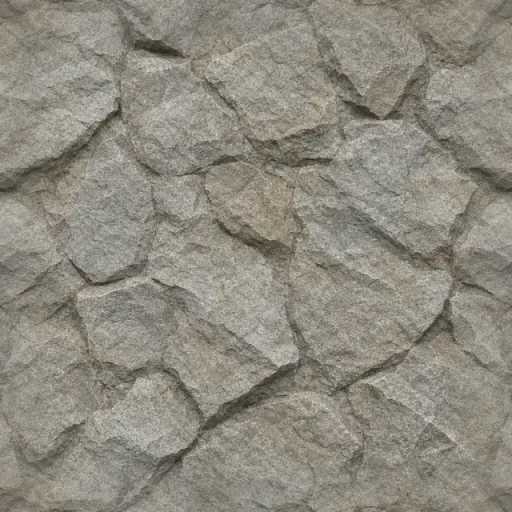
Split Stone
Stone presented with broken or split faces rather than polished slabs. Sharp fractured planes, rough shadowed gaps, irregular module depth, and chipped edges define the look.
Common names
- broken stone
- rubble stone
- split-face stone
- rough stone
Search phrases
- rough broken stone
- stacked stone wall
- natural split stone
- rubble stone wall
Common uses
- Stone walls
- Garden edges
- Retaining walls
- Fireplaces
- Rustic cladding
Choosing points
- Best for exterior walls, fences, and fireplaces where rough stone shadow and stacked texture are wanted.
- The look depends heavily on joint depth, stone size, and whether the face is freshly split or weathered.
- Deep joints create strong shadows.
- Outdoor split stone collects soil, moss, and water in crevices.
How it ages
- Durability depends on the stone type and wall construction; loose stones and poor drainage cause movement and staining.
What to avoid
- Do not use rough split stone where people lean, touch often, or need easy cleaning; sharp texture can scrape and hold dirt.